Buyers · Dominican Republic
How to buy property in the Dominican Republic as a foreigner: a step-by-step guide for 2026
Foreigners can buy property in the Dominican Republic in their own name, with the same ownership rights as Dominican citizens and without residency or a local company. What protects you is not just the law but the process: an independent attorney, a clean certificate of title, a contract with teeth and payments you can trace. This guide walks through that process in the order it happens, with the costs in dollars and the tax changes passed in 2026.
Ilkania Baez · Realtor® since 2008 · RE/MAX Hall of Fame · Florida License 3207105 · English · Español
Can a foreigner buy property in the Dominican Republic?
Yes. Dominican law lets foreigners buy and register real estate in their own name, with the same ownership rights as citizens, no residency requirement and no need to set up a company. If you are a Dominican citizen living in the United States, the process is the same, with your cédula instead of a passport. Some buyers hold property through a Dominican or US company for estate or tax planning; that is a choice to make with your attorney and your accountant, not a requirement.
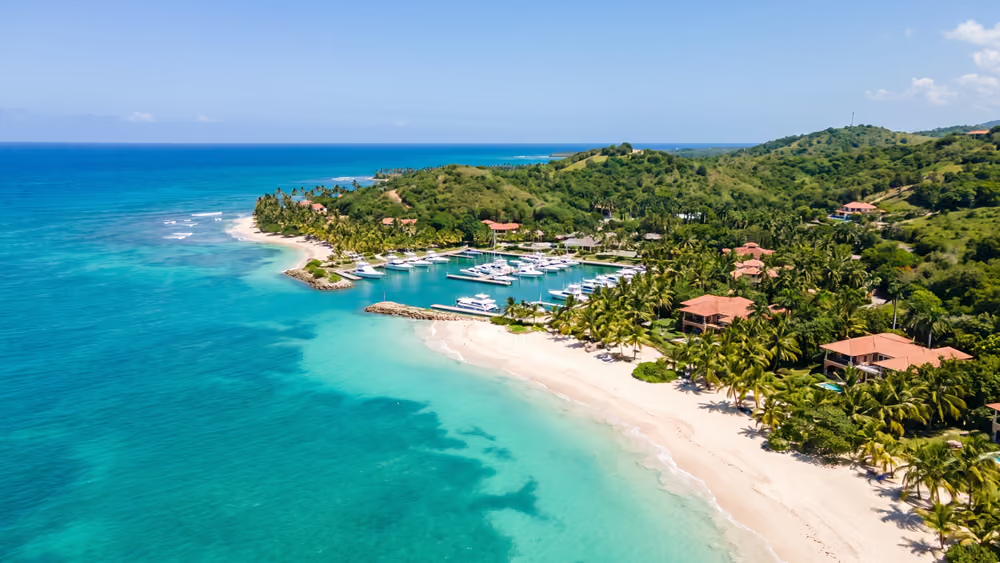
One rule surprises buyers from Florida: nobody can sell you the beach. Beaches are public domain under the Dominican Constitution, and the law reserves a 60-meter (about 200-foot) coastal strip, measured from the high-tide line, where construction is prohibited except by special authorization. A beachfront villa sits next to a public beach.
The buying process, step by step
- Define the area, the budget and the purpose. Rental income, a winter home or both point to different places: Punta Cana for vacation rental demand and direct flights, Samaná for a quieter life by the sea, Puerto Plata for lower entry prices on the North Coast and Casa de Campo for a private resort community.
- Hire your own attorney. Not the developer’s and not the seller’s. A Dominican real estate attorney reviews the title, the contract and the taxes, and a notary certifies the signatures. Legal fees are commonly around 1% to 1.5% of the price; get the quote in writing before work starts.
- Reserve with a refundable deposit. A reservation agreement takes the property off the market while your attorney does the due diligence. Make sure it says the deposit comes back if the title or the contract fails the review.
- Check the title. Your attorney obtains a certification of the property’s legal status from the Registro de Títulos, the Dominican title registry; it shows the owner and any mortgage, lien or lawsuit, and confirms that the property has its own certificate of title. Avoid property held only under a constancia anotada, a title to an undivided share of a larger parcel, unless the survey and subdivision, called deslinde, is completed before you pay.
- Check everything else. Property tax (IPI) paid up to date; HOA dues and rules, including whether short-term rentals are allowed; construction permits; the condominium regime; and, if the seller says the project has CONFOTUR tax benefits, the resolution that granted them.
- Sign the contract. For a finished property, a purchase agreement; for pre-construction, a promise of sale with payments tied to construction milestones, a delivery date and penalties if the developer is late. The signatures are notarized.
- Pay by traceable bank transfer. Never in cash and never to a personal account. Under Dominican anti-money-laundering law, real estate agents, builders, attorneys and notaries must identify you and the source of your funds, and since May 2025 any transfer deed for more than RD$1,000,000 (about US$17,000) must state how the price was paid.
- Pay the 3% transfer tax. The DGII, the Dominican tax authority, values the property and charges 3% of the higher of two figures: its own valuation or the price in the deed. You have six months from the date of the deed; after that, surcharges and interest apply. If you buy directly from the developer in a project with a current CONFOTUR classification, you do not pay that 3%, but the exemption is not automatic: it is requested from the Ministry of Finance and Economy.
- Register the title in your name. With the tax paid, your attorney files the deed at the Registro de Títulos, which issues a new certificate of title in your name. Until that certificate exists you have a contract; once it does, you own the property.
Closing costs: what you pay on top of the price
Without a tax exemption, plan on roughly 4% to 5% above the price. On a US$300,000 condo in Punta Cana, the transfer tax is about US$9,000 if the DGII’s valuation does not exceed the price, and legal fees add roughly US$3,000 to US$4,500, so call it US$12,000 to US$13,500 in total, plus notary and registry fees. If you buy from the developer in a CONFOTUR project, the US$9,000 disappears. The full list:
- Transfer tax: 3% of the higher of the DGII’s valuation and the price in the deed, unless you buy from the developer in a CONFOTUR project.
- Attorney’s fees: commonly around 1% to 1.5% of the price.
- Notary, registry and filing fees, small next to the tax.
- Mortgage registration tax if you finance with a Dominican bank: 2% of the loan in 2026, 1% in 2027 and nothing from 2028 on, under Law 30-26.
- In new projects, the first HOA contributions and, if you plan to rent, furniture and setup.
Taxes once you own the property
- Property tax (IPI). 1% a year on the part of the combined assessed value of your Dominican real estate above an exempt amount: RD$10,695,494 in 2026, about US$180,000 at late-September exchange rates, adjusted for inflation every year. It is paid in two installments, on March 11 and September 11. A condo worth less than that, if it is your only property in the country, pays nothing.
- Rental income. It is taxable in the Dominican Republic, and as a US citizen or tax resident you also report it to the IRS, where the foreign tax credit usually keeps you from paying twice. How it is taxed depends on how you rent, so set it up with a Dominican accountant before your first guest arrives. If the rent goes into a Dominican bank account, you may also need to file an FBAR, which applies when your foreign accounts together exceed US$10,000 at any point in the year.
- Capital gains when you sell. Since June 18, 2026, an individual who sells Dominican real estate pays a flat 10% on the gain as a single, final Dominican tax under Law 30-26, and sellers over 65 selling their primary residence are exempt; a vacation home does not qualify. As a US taxpayer, you also report the sale to the IRS, where you can usually claim the Dominican tax as a foreign tax credit. The method for calculating the gain was still awaiting regulation when I closed this guide, so confirm it with your accountant before you list.
Pre-construction or a finished property
Buying pre-construction gets you a lower entry price, a payment plan during construction and, in CONFOTUR projects, the most years of exemption. In exchange, you take the risk of delays. Protect yourself with payments tied to construction milestones, penalties for late delivery, a developer whose finished buildings you can visit and, ideally, a project structured as a real estate development trust (fideicomiso) under Law 189-11, which keeps the land and the buyers’ money separate from the developer’s own assets, under a regulated trustee.
A finished property costs more but removes the construction risk and lets you see its real rental history. On a resale you pay the 3% transfer tax even in a CONFOTUR project, because the exemption only applies to the first buyer; the guide to the CONFOTUR law explains why.
Financing a purchase from the United States
Some Dominican banks lend to foreigners, usually with a larger down payment, shorter terms and higher rates than in the United States. Most of my clients pay cash, use a developer payment plan or tap the equity in their Florida home and buy outright. If you do finance locally, the mortgage registration tax falls to 1% in 2027 and disappears in 2028, so on a large loan the timing matters.
Residency is optional
You do not need residency to buy, own or rent out property. If you plan to live in the country, an investment of at least US$200,000 brought in from abroad lets you apply for permanent residency by investment under the Migration Law and its regulation, with a certification from ProDominicana, the government’s investment agency. Many buyers meet it with the purchase itself; confirm the structure with an immigration attorney first. There are also residency programs for retirees and for people living on foreign income. These are immigration filings handled by an immigration attorney; I coordinate the purchase so the paperwork lines up.
Buying without traveling
You can complete the purchase from the United States. Your attorney sends you a special power of attorney in Spanish; you sign it before a US notary, have it apostilled by the state that commissioned the notary (in Florida, the Department of State), and your attorney signs the deeds in the Dominican Republic on your behalf. Both countries belong to the Hague Apostille Convention, so no consular legalization is needed. Visit before you commit if you can; when you cannot, I do live video walk-throughs and send real photos, not renderings.
The mistakes I see most
- Using the developer’s attorney because it is convenient.
- Paying deposits in cash or to personal accounts.
- Buying a share of a parcel under a constancia anotada with no completed deslinde.
- Trusting a rental projection with no booking history behind it; run it through the vacation rental ROI calculator first.
- Not checking whether the HOA allows short-term rentals.
- Recording a lower price in the deed to save tax: the DGII taxes at least its own valuation, and a lower recorded price can mean a larger taxable gain when you sell.
Before you decide
This guide summarizes the rules in force as of October 2, 2026, from official sources: the DGII, the Ministry of Finance and Economy and the text of the laws. It does not replace a Dominican attorney’s review of your purchase. On every transaction I work with local attorneys who check the title, the contract and the taxes, and I introduce you to them on our first call.
Frequently asked questions
Can a US citizen buy property in the Dominican Republic?
Yes, in your own name and with the same ownership rights as a Dominican citizen, without residency or a local company. What you do need is a Dominican attorney to check the title and the contract before you sign.
How much are closing costs in the Dominican Republic?
Roughly 4% to 5% of the price: the 3% transfer tax, legal fees of around 1% to 1.5%, and notary and registry fees. If you buy from the developer in a CONFOTUR project, the 3% transfer tax does not apply.
Is it safe to buy property in the Dominican Republic?
It is as safe as the title and the contract you sign. An individual certificate of title verified at the Registro de Títulos, traceable payments, an independent attorney and a developer with delivered projects: yes. Verbal promises and a constancia anotada without a completed deslinde: no.
Can I buy property in the Dominican Republic without traveling?
Yes. With a special power of attorney notarized and apostilled in the United States, your attorney can sign on your behalf. I recommend at least one visit, or a live video tour, before you commit.
Does buying property give me residency?
Not automatically. An investment of US$200,000 or more brought in from abroad lets you apply for residency by investment, a separate immigration filing handled by an immigration attorney, and the purchase itself often meets it.
What property tax will I pay every year?
The IPI: 1% a year on the part of the total assessed value of your Dominican real estate above RD$10,695,494 in 2026, about US$180,000. If your only property in the country is worth less, you pay nothing; and if you bought from the developer in a CONFOTUR project, that unit is exempt during the project’s exemption period.
Professional valuation at no cost